
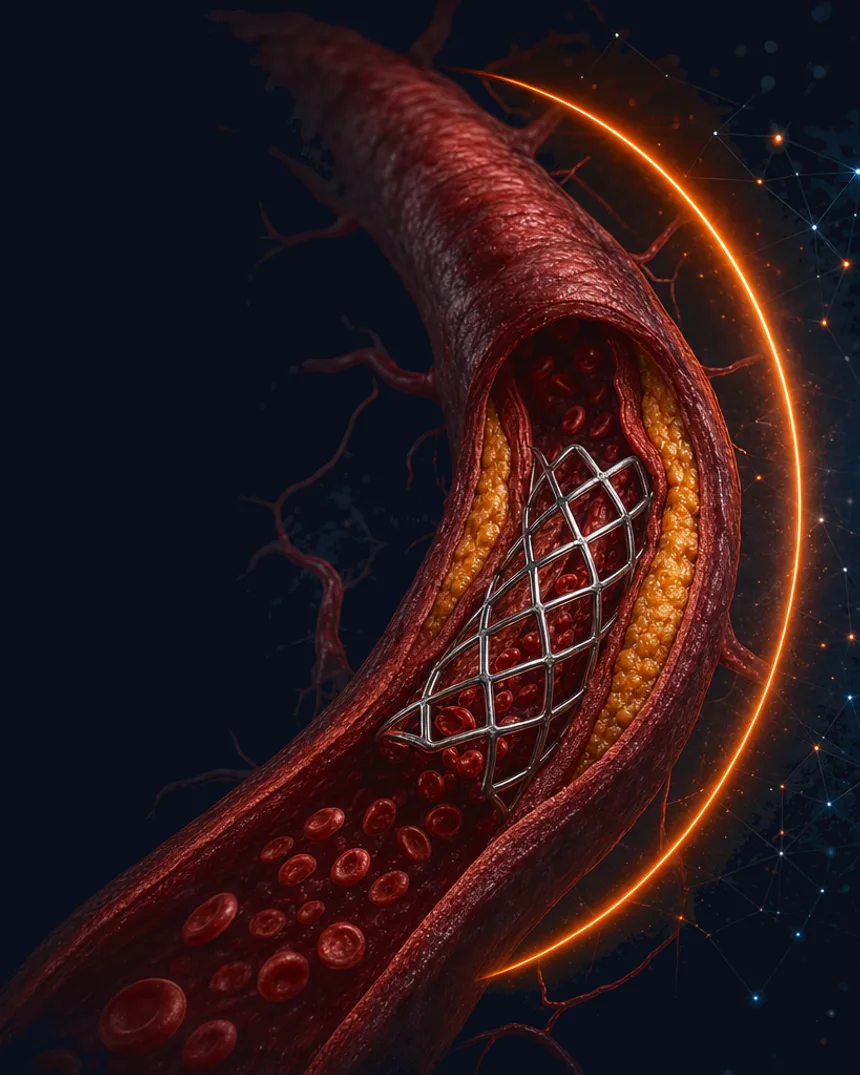
An 80% coronary blockage at 44 changed how I evaluate every health claim.
Calibrated Signal examines cardiovascular risk, longevity claims, diagnostics, supplements, and wellness advice through the biology of aging, clinical medicine, bioinformatics, and an insider’s understanding of how wellness marketing really works.
Claims evaluated through the biology of aging framework
No sponsors. · No supplement line. · No cheerleading.
The Four Worlds
Four worlds that shape how I evaluate every health claim.
Bedside
Where statistics become clinical judgment.
A p-value is not a patient. Bedside medicine trains you to separate statistical significance from clinical significance, and to ask whether a finding actually changes risk, decisions, or outcomes.
Mayo Clinic ED RN, CEN. APRN-FNP candidate at Duke.
Bench
Where health claims meet biological mechanism.
Bench science, molecular biology, and bioinformatics train you to ask what a claim is actually acting on: which pathway, which hallmark of aging, which molecular signal, and whether the data supports the story being sold.
MS, Bioinformatics & Computational Biology. Published epigenetics and oncology research. PhD candidate — UMN/Mayo Clinic.
Boardroom
Where plausible mechanisms become marketing copy.
Fifteen years inside the supplement and wellness industry taught me how health claims get built: how mechanisms become promises, how weak evidence gets inflated, and how incentives shape what consumers are told.
Former supplement industry CEO. No supplement line. No supplement affiliates. No sponsors. Ever.
Patient
Where the optimization playbook missed the risk.
At 44, an 80% coronary blockage forced me to confront the gap between predominant biohacker influencer advice and real cardiovascular risk. I was doing many of the things the longevity world celebrates, but the narrative was incomplete.
The Five Filters
A repeatable framework for evaluating health and longevity claims before they become advice.
Aging Biology
What biology is this supposed to change?
Which hallmarks of aging, upstream systems, or molecular pathways does the claim touch?
Clinical Reality
Does it matter in actual humans?
Is the effect meaningful for real people, or does it mostly live in a biomarker, dish, mouse, or marketing deck?
Evidence Quality
How strong is the evidence?
Is the claim supported by hard outcomes, randomized trials, human biomarkers, observational data, animal models, cell studies, or mechanism alone?
Systems Biology
What happens when you push the pathway?
Biology is not a single switch. What else does the pathway do in context, and what tradeoffs might come with moving it?
Incentives
Who benefits if you believe it?
Who profits if the claim becomes popular, and who pays the price if it is wrong?
Why This Exists
The near miss that made me build this.
Coronary Angiogram
Stent placement restores blood flow
Before stent
After stent
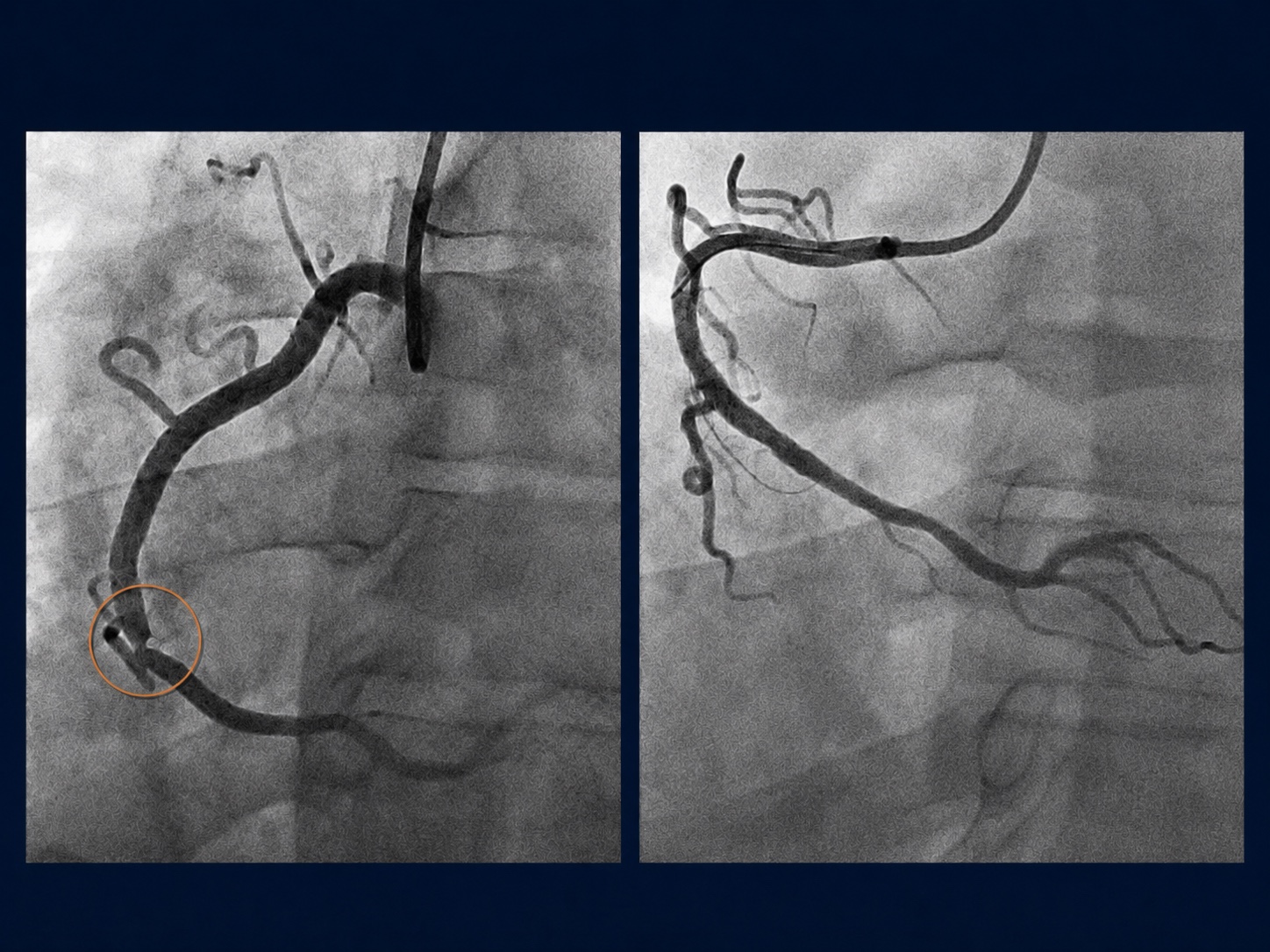
Blockage
Severe narrowing limits blood flow beyond this point.
Stent placed
Restored vessel patency with improved blood flow.
Circle indicates treated lesion site.
I was the “optimized” biohacker. Standard testing didn’t catch what mattered.
Low-carb diet. Daily exercise. Normal labs. Solid CGM results. I had the devices, the supplements, the metrics, and the standard high-performance playbook.
But reassuring signals are not the same thing as knowing your risk.
Routine testing did not show the disease building inside my coronary arteries. I had vague palpitations and chest discomfort, but nothing that felt alarming. Initial labs and diagnostic testing looked perfect. My cardiologist was reassured, but I still felt like something was off. I had to push for the right imaging.
That imaging found an 80% blockage.
If the system can nearly miss obstructive coronary disease in someone with high health literacy and access, what are we missing in everyone else?
That gap between reassurance and reality is why Calibrated Signal exists.
Follow the Investigation
Every post is a chapter. Read in order or jump in anywhere.
The Event
Posts 1–5
An 80% blockage at 44. A wake-up call.
Read this act →2The Cracks
Posts 6–10
What standard testing missed — and why it matters.
Read this act →3The Biology
Posts 11–18
Aging biology. Endothelial dysfunction. The NO pathway. What the body actually does.
Read this act →4The Framework
Posts 19+
A repeatable method to evaluate claims and reduce risk.
Read this act →Recent Posts
The latest work from the investigation.

What Keeps Plaque in Your Heart Arteries From Rupturing?
Is soft plaque dangerous? Whether a plaque ruptures depends on its fibrous cap, which no CT report measures. What thins it, and the trials where caps thickened.

Your Angiogram Was Clean. Nobody Tested Whether Your Artery Clamps.
Coronary artery spasm is diagnosed with an acetylcholine test in the cath lab, not an angiogram. What it measures, why it is rarely run, how drugs blunt it.

I Finally Have the Diagnosis That Explains Years of Chest Pressure. It Wasn't Anxiety. It Was Never "All in My Head."
A stent didn't stop the episodes. Every scan said fine. The answer came from the one test I almost turned down.